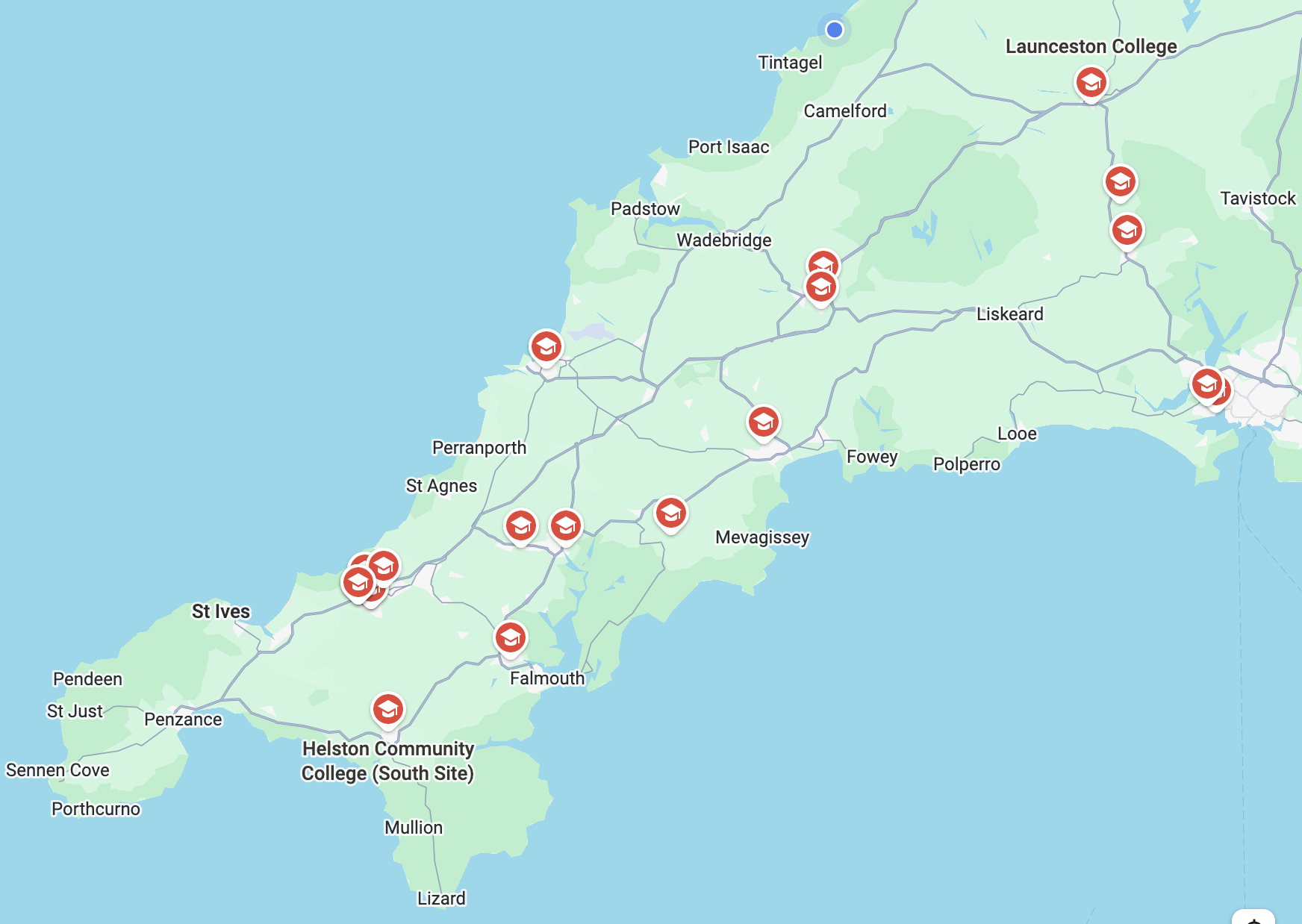
When young people leave school at 16, they should be able to choose the college course that best matches their interests, ambitions and talents. Unfortunately, for many families in our parish, that choice is increasingly determined not by what a student wants to study, but by whether they can physically get there.
Recently, a survey was conducted among parents and guardians of young people in Years 11, 12 and 13 living in Forrabury and Minster Parish. While every family’s circumstances are different, a clear and consistent message emerged: transport has become one of the biggest barriers to accessing further education.
Three key figures from the survey:
- 63% said transport influenced educational choices.
- 76% see transport as a barrier to education.
- 88% believe current journey times are unreasonable.
Many parents reported that transport arrangements directly influence college and course choices. Some young people have already had to abandon their first-choice college because suitable transport was unavailable, too expensive, or simply involved unmanageable journey times.
The issue is particularly significant in a rural area such as ours. While we are fortunate to have excellent further education providers across Cornwall, getting to them can be another matter entirely. Students travelling to colleges such as Callywith, Truro, Duchy or St Austell often face journeys lasting several hours each day.
Parents described children leaving home before 7:30am and not returning until early evening. Some students spend up to four hours a day travelling. During the winter months, this often means leaving and returning home in darkness.
Unsurprisingly, many families expressed concerns about the impact these long days have on young people’s wellbeing. Parents spoke about tiredness, stress, reduced time for homework, limited opportunities to participate in clubs or social activities, and the effect on mental health.
Cost is another major concern. Families reported paying hundreds of pounds each year for transport, with some questioning whether the level of service provided justifies the expense. At a time when many households are already feeling financial pressure, these additional costs can be difficult to absorb.
The survey also highlighted widespread frustration about the lack of clear information available to families. Parents frequently reported being passed between colleges and transport providers when trying to understand what services were available and whether their child would be eligible to use them.
Perhaps the most worrying finding was that some young people have already altered their educational plans because of transport difficulties. In a small number of cases, transport challenges have contributed to students changing courses, changing colleges, or even stepping away from education altogether.
This matters because education and training beyond the age of 16 is no longer optional. Young people are expected to remain in education or training, yet many rural families feel that the infrastructure needed to support this expectation is becoming increasingly difficult to access.
The concerns raised in the survey are not unique to Forrabury and Minster. Similar challenges are likely to be experienced by families across North Cornwall, from Tintagel and Delabole to Crackington Haven, Camelford and beyond.
The survey is therefore about more than buses and timetables. At its heart lies a simple question: should a young person’s educational opportunities be determined by where they live?
Our community clearly believes the answer is no.
The findings from this survey have now been shared with local councillors and Members of Parliament in the hope that they will contribute to wider discussions about improving post-16 transport across Cornwall. Families are not asking for special treatment. They are simply asking for young people in rural communities to have the same opportunities as their peers elsewhere.
As a parish, we should be proud that so many families took the time to share their experiences. Their voices have helped shine a light on an issue that affects not only individual students but the future prospects of our entire community.
Cllr Sarah Costello
Forrabury and Minster Parish